

Articles
What is a Prosthetic Unit?
A prosthetic unit is a living environment specifically designed for individuals with major neurocognitive disorders (MNDs), such as Alzheimer’s disease or other forms of dementia, who exhibit significant behavioral disturbances—such as intrusive wandering, disorientation, rummaging, or elopement—as well as a loss of spatial awareness. Housing up to 14 residents in a single unit, this facility offers a secure, calming, and adapted environment to compensate for cognitive and sensory losses, while promoting their well-being.
Who is a prosthetic unit intended for?
Prosthetic units accommodate individuals who meet specific criteria:
- Residents with irreversible dementia: Diagnosis of NCD (e.g., Alzheimer’s) with significant behavioral disturbances, sometimes associated with manageable psychological disorders.
- Individuals exhibiting wandering behaviors: Frequent wandering, disorientation, or elopement.
- Loss of spatial awareness: Difficulty orienting themselves in their environment.
- Family approval: The prosthetic approach must be approved by the family or caregivers.
These units are therefore intended for residents requiring specialized care and a secure environment to manage their complex needs.
Services and objectives of the prosthetic units
As highlighted in the feedback, the prosthetic units aim to provide comprehensive support to residents and their loved ones. Their objectives include:
1. Maintaining and improving quality of life
- Preserving functional autonomy through activities tailored to each resident’s abilities and lifestyle.
- A personalized approach centered on individual needs.
2. Preventing and managing behavioral disturbances
- Intervention by staff trained in the BPSD (Behavioral and Psychological Symptoms of Dementia) approach.
- Flexible routines that respect each resident’s rhythm.
3. Ensuring safety and comfort
- Continuous 24/7 monitoring with emergency call systems.
- Layout designed to promote safe wandering.
4. Supporting families and caregivers
- Support and communication with families to reassure and involve them.
Key Features:
Adapted Environment:
- Layout promoting orientation with visual and sensory cues.
- Optimized lighting and acoustics to reduce confusion and anxiety.
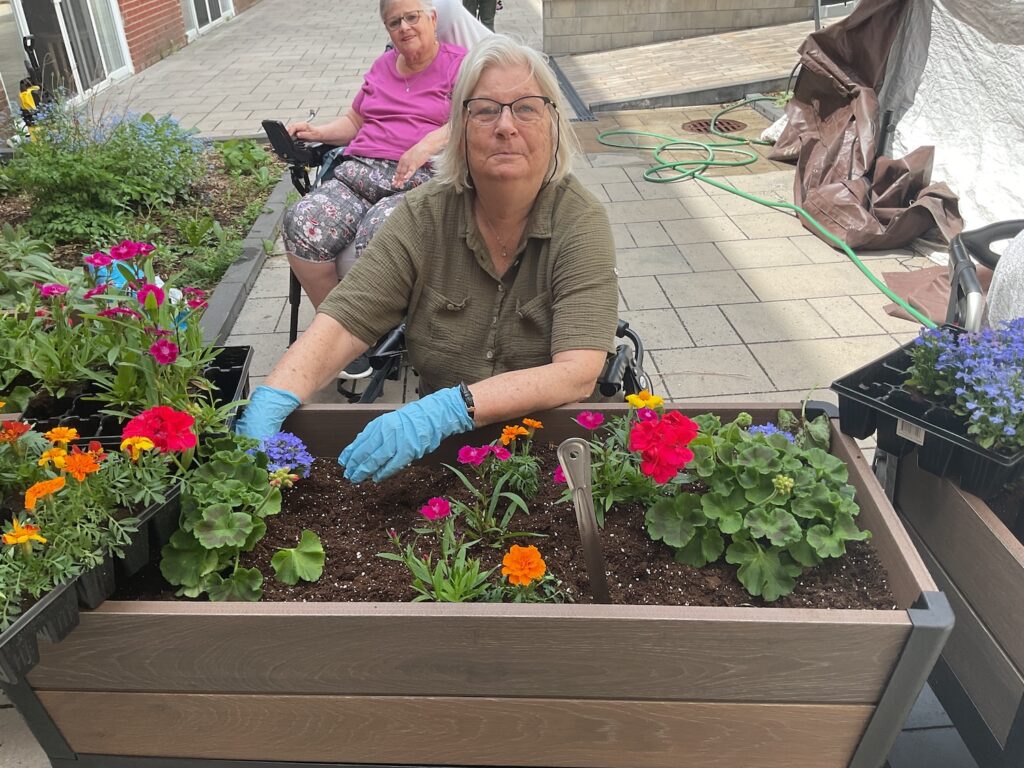
- Common areas (inner courtyard, dining room, family room) designed for tranquility and conviviality.
Trained staff:
- Interdisciplinary team specializing in TNCM and the SCPD approach.
- Constant presence for supervision and support.
Daily Life :
- Meals served one dish at a time to recreate a family atmosphere (dinner and supper together, breakfast depending on wake-up time).
- Adapted recreational activities to stimulate residents.
FAQ: Prosthetic Units
People diagnosed with irreversible dementia, wandering behavior, and a loss of spatial awareness.
An interdisciplinary team trained in the SCPD approach and NMT.
Yes, with special provisions for patrols and 24/7 surveillance.
Yes, served in a friendly manner and at each person's own pace.
Contact the CLSC for a clinical evaluation and referral.
Articles