


Articles
Oral Health in Older Adults and Its Effects on the Entire Body
- Catégories : Private senior homes, Senior home living
- Estimated Reading Time : 10 minutes

Oral health is an all-too-often-neglected pillar of healthy aging. According to the Government of Quebec, periodontal disease (an infection of the gums and bone that support the teeth) is now recognized as a risk factor for cardiovascular disease, stroke, worsening diabetes, and pneumonia. Taking care of your teeth and gums is therefore not just about your smile—it’s about protecting your heart, your nutrition, and your independence.
The mouth: a mirror and gateway to the body
It was long believed that oral health was limited to the teeth. We now know that an unhealthy mouth can affect the entire body. The mechanism at play is inflammation: when the gums are infected (periodontitis), the bacteria and the inflammation they generate can enter the bloodstream and contribute to problems far beyond the mouth.
This chronic, low-grade inflammation contributes to the development of atherosclerosis, which explains the established link between periodontitis and heart disease. In older adults, oral bacteria can also be inhaled into the lungs and cause pneumonia, a major cause of hospitalization among seniors.
Why the Risk Increases with Age
Oral health problems (tooth loss, gum disease, dry mouth) accumulate over the course of a lifetime and worsen with age. Several factors specific to aging increase the risk:
- Dry mouth, which is very common and often caused by > medications: saliva naturally protects against cavities, > and a lack of it accelerates their development.
- Reduced dexterity (arthritis, tremors, aftereffects of a stroke), > which makes brushing more difficult.
- Dentures that are poorly fitted or not cleaned properly, a source > of irritation and infections such as candidiasis.
- Difficulty accessing dental care, due to mobility issues > or cost.
The Direct Link to Nutrition
Poor oral health primarily leads to a decline in nutrition. Pain, missing teeth, or uncomfortable dentures often cause older adults to avoid foods that are difficult to chew: meats, raw fruits and vegetables, and nuts. Their diet then becomes limited to soft foods that are sweeter and less nutritious.
This shift leads directly to malnutrition, a serious problem among older adults that weakens muscles, the immune system, and energy levels. Chewing well means eating well: oral health is the first link in the nutritional chain.
Good Daily Habits
Brush twice a day with fluoride toothpaste and a soft-bristled toothbrush. If you have reduced dexterity, an electric toothbrush or one with a wider handle makes the task much easier.
Clean between your teeth every day (using floss, interdental brushes, or a water flosser) in areas your toothbrush can’t reach.
Caring for dentures: Remove and clean them daily, and leave them out overnight to let your gums breathe.
Combat dry mouth by drinking water regularly; talk to your doctor or pharmacist, as medication adjustments may sometimes be possible.
See the dentist regularly, even if the person wears full dentures: checkups can detect cavities, infections, and lesions, including oral cancer.
A key role for the caregiver
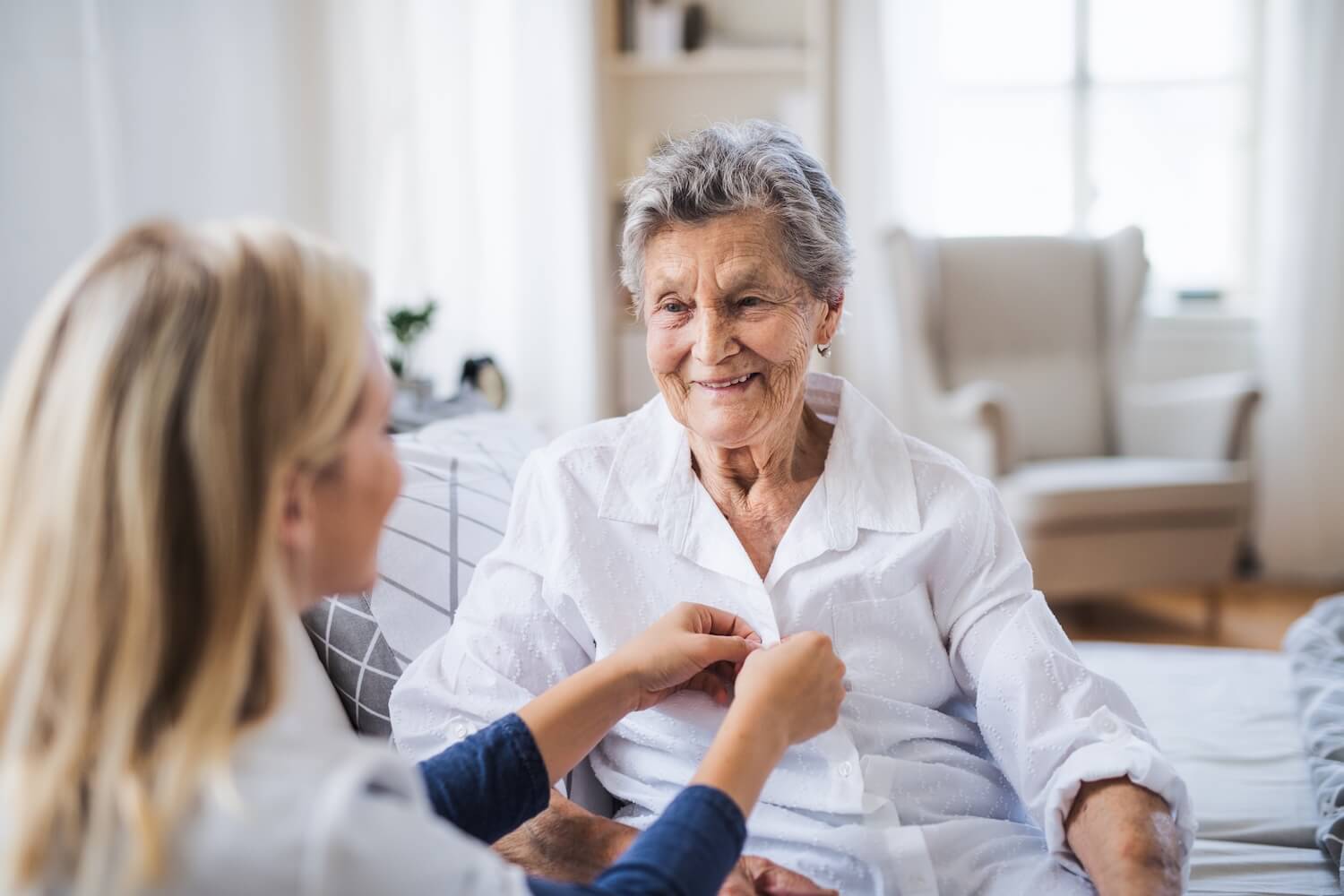
When an older adult loses independence, oral hygiene is often the first thing to be neglected—and the least visible. The caregiver can ensure that teeth are brushed, watch for warning signs (bleeding gums, persistent bad breath, refusal to eat, dentures causing discomfort), and help arrange dental appointments. A simple, regular glance inside a loved one’s mouth can prevent significant suffering. For more on the burden of providing this care, see “The Role of the Caregiver.”
FAQ: Oral Health for Seniors
Offer an electric toothbrush or one with a wider handle, assist them as needed, and establish a routine at a set time each day. Monitor their gums, breath, and the comfort of their dentures, and report any problems to the dentist. In cases of severe loss of independence, seek advice from an oral health professional.
Elle est fréquente, mais pas inévitable. Elle résulte souvent de médicaments plutôt que de l'âge lui-même. Comme elle favorise les caries, il vaut la peine d'en parler au médecin ou au pharmacien : hydratation, substituts de salive ou ajustement de traitement peuvent aider.
Mandala Sante's Offerings in Senior Homes :


Articles