



Articles
When Gardening Becomes a Source of Well-Being for Seniors
- Catégories : Private senior homes, Senior home living
- Estimated Reading Time : 10 minutes
Why Nature Is Good for Us
Contact with greenery acts as a stress regulator for the body. Exposure to a natural environment lowers blood pressure, calms the nervous system, and improves mood. This isn’t just a feeling: classic clinical observations have shown that patients whose rooms overlooked a green space recovered faster and required less pain medication than those facing a wall or a parking lot. For older adults, this calming effect is invaluable. It helps reduce anxiety, promotes better sleep, and breaks up the monotony of daily life, particularly in cases of loss of independence or isolation.Gardening: A Gentle, Full-Body Workout
Light gardening combines—without seeming to—almost all the ingredients for good health.Gentle and Purposeful Movement
Watering, sowing, pruning, weeding: these actions help develop fine motor skills, flexibility, and balance. It’s a form of adapted physical activity in disguise, driven by a concrete goal rather than performance. The simple act of bending over, standing up, and moving between plants helps maintain mobility. For more on this topic, see our article “Adapted Physical Activity.”Stimulation of the Five Senses
The scent of a ripe tomato, the texture of the soil, the colors of the flowers, the song of the birds: the garden is a sensory feast. This stimulation is particularly beneficial for people with cognitive impairments, for whom the sense of smell and repetitive movements can evoke memories and soothe restlessness.A Sense of Purpose and Pride
Caring for a plant means having a responsibility, a reason to get out of bed, and the satisfaction of seeing the fruits of one’s labor. This sense of purpose helps preserve self-esteem, acting as a bulwark against the feelings of worthlessness that often accompany aging.Gardening at Any Age and Skill Level
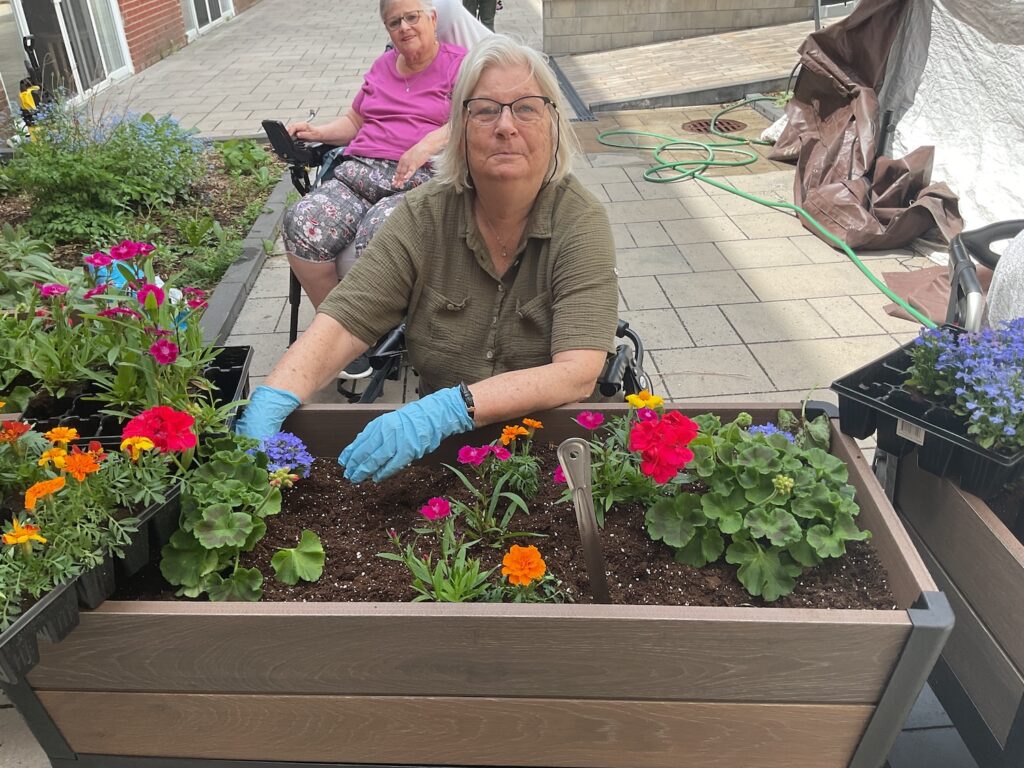
Gardening can be adapted to any ability. To protect your back and knees, raised containers and tabletop planters allow you to garden while standing or sitting, without having to bend over. Tools with long handles or ergonomic grips make them easier to hold. No yard? No problem. A few pots on a balcony, a herb planter on a windowsill, or even houseplants are enough to reconnect with nature. In winter, caring for houseplants or sprouting herbs extends the enjoyment all year round.Ideas for Bringing Nature into Your Daily Life
Beyond gardening, there are countless ways to connect with nature: a daily walk in a park, a cup of coffee on the balcony, a meal by a sunny window, or a weekly visit to a botanical garden. Feeding birds from your window offers a lively spectacle and a comforting routine for those who don’t get out much. These activities are most meaningful when shared: gardening with a grandchild or joining a community garden adds the benefit of social connection to that of nature, as we discuss in “The Importance of Social Connection.”FAQ: Nature, Gardening, and Senior Well-Being
Oui. Le contact avec la nature et le jardinage réduisent le stress et l'anxiété et améliorent l'humeur. L'horticulture thérapeutique est d'ailleurs utilisée en milieu de soins pour apaiser l'agitation et soutenir la qualité de vie, notamment auprès des personnes atteintes de troubles cognitifs.
Yes, it is even often recommended. Sensory stimulation and repetitive, familiar movements have a calming effect, help jog the memory, and reduce agitation. The activities simply need to be supervised and adapted to the person’s abilities.
In winter, houseplants, a small herb garden on the counter, or caring for a bonsai take center stage. The goal is to maintain a connection with living things and to engage in a daily act of care, no matter the season.
Mandala Sante's Offerings in Senior Homes :


Articles