

Articles
Safety and Dignity: When and How Should One Consider Transitioning to an IR Facility or a Long-Term Care Facility?
- Category : Private senior homes, Senior home living
- Estimated reading time : 10 minutes

When staying at home is no longer a safe option
Staying at home is a priority for a large portion of the population, but certain warning signs indicate that the current environment no longer meets safety needs. These indicators often include:- Wandering and falls: Episodes of disorientation or frequent loss of balance despite ergonomic adaptations.
- The need for constant supervision: A significant loss of cognitive or physical autonomy requiring constant vigilance.
- Caregiver burnout: When the required support exceeds the capabilities of family members, impacting the health of the entire family.
The Mandala Santé Care Continuum: A Tailored Approach
Mandala Santé operates an integrated network covering the entire care continuum in Quebec. It is crucial for families to understand the different types of care settings to make an informed choice.Private Retirement Home (RPA)
The RPA is a living environment designed for independent seniors or those with mild loss of independence. It primarily offers:- Meal assistance and basic services.
- 24/7 security for greater peace of mind.
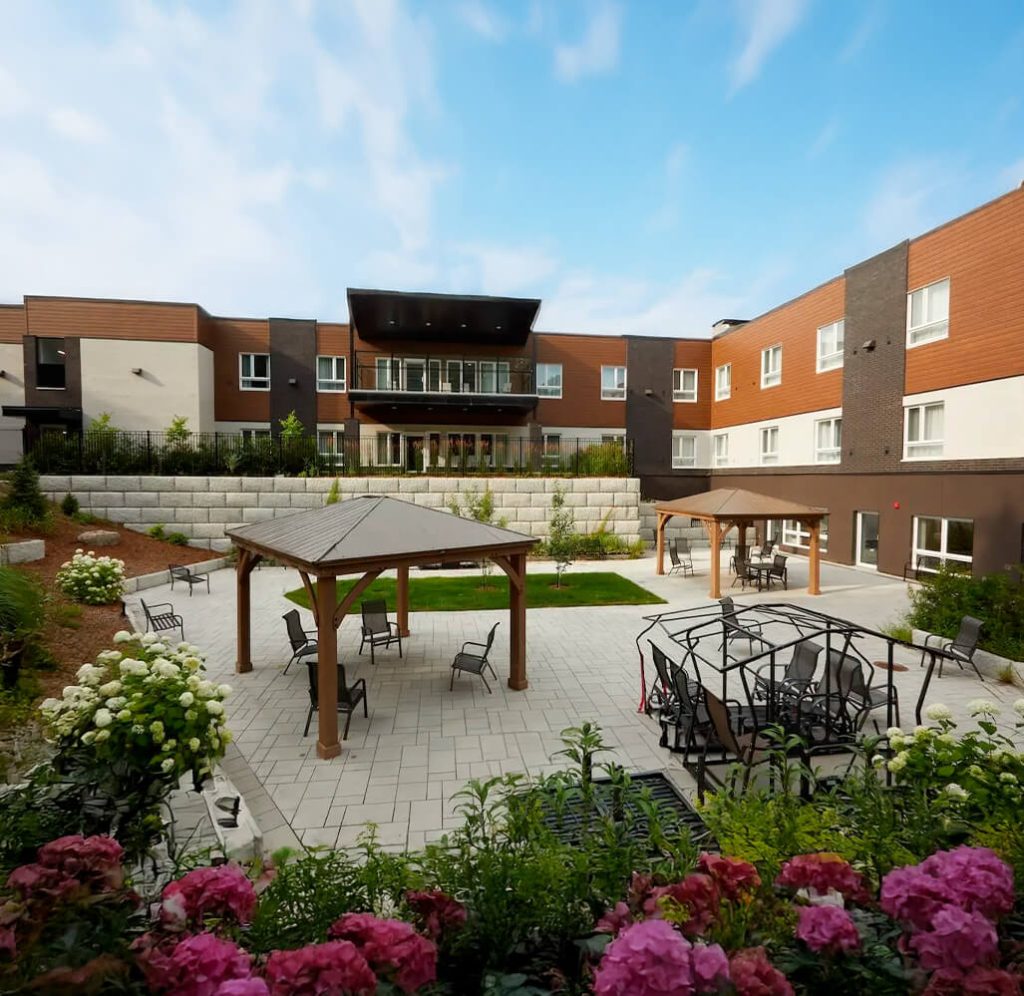
- Ergonomic studios and apartments that prioritize independence, such as at the Villa des Brises Residence, Antoine-Feuillon and at the Résidence le Samoa.
The Intermediate Resource (RI): The Substitute Living Environment
For those with greater needs, the RI serves as a substitute living environment.- It accommodates individuals requiring sustained support, quantified as between 90 and 180 minutes of care per day.
- Admission is coordinated through the public network and the CLSC.
- Facilities such as the Résidence Antoine-Feuillon and the Manoir Gatineau offer a modern environment combining RI units and RPA rooms.
The CHSLD: Long-Term Care
Finally, CHSLDs specialize in long-term care for individuals with more significant loss of independence. It is an environment where constant monitoring is provided, such as at the CHSLD des Patriotes, which benefits from immediate proximity to hospital services for complex care.The Mandala Santé Philosophy: Putting People at the Center of the Transition
At Mandala Santé, we incorporate specific clinical pillars to ease this life transition and maintain quality of life.Cognitive reserve and the preventive approach
We don’t just provide physical care. Our approach to cognitive reserve uses social stimulation, music, animal-assisted therapy, and reminiscence therapy to preserve intellectual abilities for as long as possible.Nutritional Optimization
Health also starts with what’s on the plate. We place particular emphasis on protein density and vitamin D supplementation, which are essential for supporting residents’ immunity and physical strength.A Commitment to Well-Being
A successful transition relies on respecting privacy and actively involving family caregivers in the daily life of the residence. We consider the family to be an essential partner in the care plan.FAQ: Transition and Living Environments
A private senior home is designed for individuals who are independent or have a slight loss of independence (assistance with meals, safety). IR is a residential care setting for those requiring ongoing support for 1.5 to 3 hours a day. Learn more.
Referral to a long-term care facility (CHSLD) requires a comprehensive medical evaluation and a multidisciplinary assessment at the CLSC. This setting is reserved for individuals with significant physical or cognitive impairments whose condition requires complex care and constant monitoring that can no longer be provided at home or in an intermediate care facility. The decision is based on specific clinical criteria designed to ensure the resident’s safety and dignity.
We recommend recreating a familiar environment with personal items. Our teams are here to help you integrate into the community as soon as you arrive.
Ressources officielles pour les familles :
Politique de bientraitance envers les aînés
Mandala Sante's Offerings in Senior Homes :
Articles