


Articles
Home Care for Seniors: An Alternative or a Stepping Stone to a Nursing Home?
- Catégories : Home care, Private senior homes, Senior home living
- Temps de lecture : 11 minutes
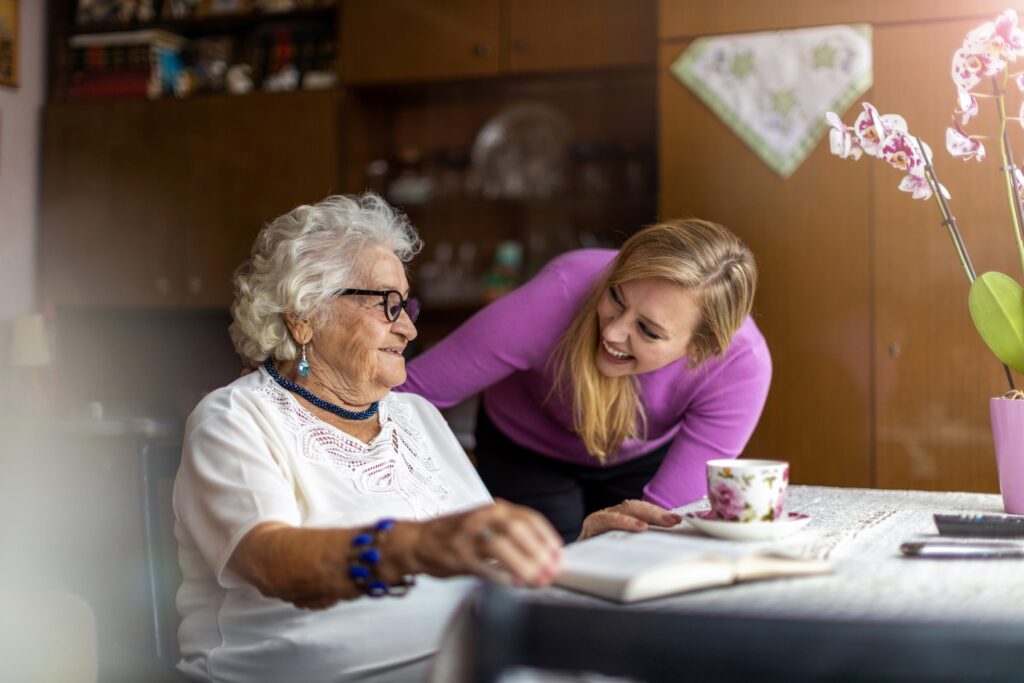
Staying at home: extending independence and comfort
Home care involves adapting the senior’s living environment and providing the necessary services so they can continue to live at home safely.Services Offered (Comprehensive Support)
Home care services are flexible and customizable. They cover a wide range of needs, provided by various service providers (private, public, and social economy organizations):- Housekeeping: Light and heavy housekeeping, laundry.
- Personal care: Assistance with getting up and going to bed, dressing, and hygiene (bathing, toileting).
- Mobility support: Assistance with transfers, accompaniment to medical appointments or errands.
- Health care: Nursing services and medical assistance provided by the CLSC (e.g., medication management, wound care).
- Psychosocial support: Friendly visits, support for family caregivers.
The Role of the CLSC
The CLSC (Local Community Services Centre) plays a central role in organizing home care in Quebec. Following a needs assessment, it arranges for free health care services (nursing, physical therapy, social support) and can refer individuals to subsidized programs for domestic help.Home Care vs. Nursing Home: A Matter of Threshold
The main difference between staying at home and moving into a senior living facility (RPA) lies in the level of dependency and the need for constant supervision.Home Care
Home care is the preferred option as long as the senior:- Retains sufficient independence for most daily activities.
- Does not require 24/7 supervision for safety reasons (frequent falls, advanced cognitive impairment).
- Is well supported by loved ones who can supplement professional care services.
The Role of the Senior Living Facility (RPA)
The RPA becomes the natural next step when home care reaches its limits:- 24/7 supervision and security: Staff are present day and night.
- Integrated services: Meals, housekeeping, and activities are included, eliminating the need for any logistics.
- Social life: Isolation is countered through activities and common areas.
- Significant loss of independence: The RPA (RI or CHSLD) is necessary when the senior requires such a high number of care hours that it would be more costly or less safe to keep them living alone at home.
The Cost Factor: Subsidies to Help Balance the Books
The cost of in-home services can quickly become high, but the Quebec government offers several programs to make this option affordable.The Tax Credit for In-Home Care for Seniors (CIDMA)
This is the primary form of financial assistance. This refundable tax credit allows you to recover a portion of the expenses paid for in-home support services (housekeeping, personal care, nursing services not covered by RAMQ, etc.). The amount of the credit increases based on the senior’s age and level of dependency.Financial Exemption Program for Domestic Help Services (PEFSAD)
This program applies to domestic help (housekeeping, laundry, meal preparation) and allows you to obtain a reduced hourly rate, subsidized directly by the government, without having to wait for the annual tax credit.Useful Links and Resources
For detailed information and to apply for services, contact the following organizations:- Your local CLSC: The single point of contact for assessment and public home care. https://sante.gouv.qc.ca/repertoire-ressources/clsc/
- Revenu Québec: Tax credit for home care for seniors: To learn about eligibility requirements and refundable amounts. https://www.revenuquebec.ca/fr/citoyens/credits-dimpot/credit-dimpot-pour-maintien-a-domicile/
- Financial Assistance Program for Home Care Services (PEFSAD): To access reduced rates for housekeeping. https://www.ramq.gouv.qc.ca/sites/default/files/documents/depl-aide-domestique-fr.5.2.pdf
- Support for Caregivers: Provides support, information, and resources to caregivers who help keep their loved ones at home. https://www.lappui.org/fr/je-suis-aidant/
Frequently Asked Questions (FAQ)
Yes. All healthcare services (nursing, lab tests, physical therapy, occupational therapy) provided by the CLSC or under its authority are free and fully covered by the RAMQ. Only home care and personal care services may be subject to a fee or subsidized.
If remaining at home is no longer safe despite the support provided, the CLSC will reassess the situation and propose a housing plan. This may include referral to an Intermediate Care Facility (RI), a retirement home with a care unit, or a long-term care facility (CHSLD), depending on the degree of loss of independence and the availability of beds.
Home care services can provide support during the early stages of cognitive disorders (such as Alzheimer's disease or dementia), particularly through respite visits and assistance with daily tasks. However, when a person requires constant supervision due to wandering or safety risks, a secure, closed-door living environment (such as a specialized unit in a long-term care facility or a CHSLD) becomes necessary.
Mandala Santé's offerings in Senior Homes :

Articles