


Articles
Creating a Safe Home Environment for Seniors: Preventing Falls and Promoting Independent Living
- Catégories : Private senior homes, Senior home living
- Estimated Reading Time : 11 minutes
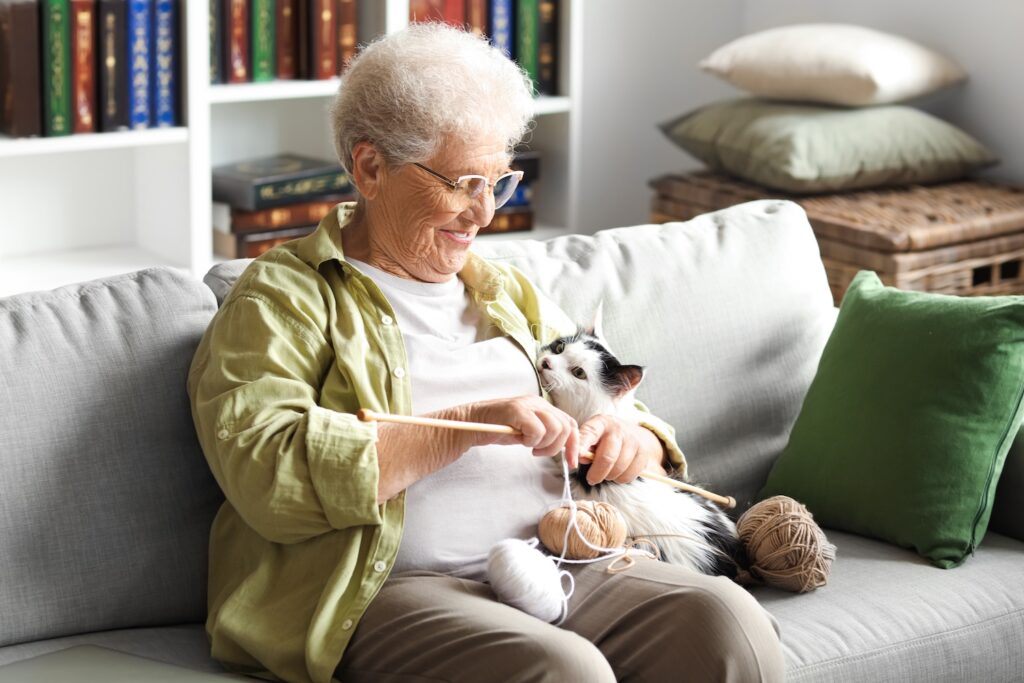
Adapting an older adult’s home is the most effective way to prevent falls and help them continue to live safely at home. According to the Institut national de santé publique du Québec (INSPQ), about one in three seniors living at home falls each year, and 30 to 50% of these falls are related to the home environment. Simple, practical modifications—such as better lighting, managing rugs, and installing grab bars—reduce these risks while helping seniors prepare calmly for future transitions to a residential care facility.
Why Adapting the Home Is an Act of Care
For the majority of seniors in Quebec, aging at home—in a familiar environment filled with memories—is a deeply held life choice. Staying at home supports independence and preserves daily routines, two essential pillars for maintaining cognitive reserve. However, for this choice to remain synonymous with well-being, the home must evolve at the same pace as the person’s physical abilities.
Adapting one’s home does not mean turning it into a hospital setting. From a well-being perspective, it is rather a matter of incorporating subtle, ergonomic adjustments that eliminate obstacles before they cause an accident. Fall prevention is the most powerful tool for avoiding sudden hospitalization and preserving the senior’s freedom of choice: in fact, falls remain the leading cause of hospitalization due to trauma among people aged 65 and older.
Lighting: The First Line of Defense Against Falls
Insufficient or poorly positioned lighting is among the easiest causes of falls to correct. As we’ve explored in our articles on sensory health, contrast sensitivity and pupillary reactivity naturally decline with age, leading to errors in judging distances.
Optimizing Transition Areas at Night
Hallways, stairways, and the bathroom entrance are critical areas, especially at night. Install automatic motion-sensor nightlights along the baseboards: they turn on as soon as the senior sets foot on the floor and light the way to the bathroom, without them having to search for a light switch in the dark.
Eliminate shadows and glare
For living areas such as the kitchen and living room, opt for LED bulbs that emit a white, diffused light, which replicates daylight without causing glare. Avoid wobbly table lamps and choose ceiling lights or track lighting that distribute light evenly, eliminating deceptive shadows on the floor.
Making Floors Safer: Rugs, Cords, and Low Obstacles
The floor often hides obstacles that are invisible to someone whose gait becomes more unsteady with age. Two key precautions are essential: managing rugs and keeping walkways clear.
Managing Rugs, the Leading Cause of Tripping
Decorative rugs, especially those that are lightweight or frayed at the edges, are the leading cause of tripping in the home. Ideally, remove them from main walkways. If the senior insists on keeping one, secure it firmly to the floor using industrial-grade double-sided tape or a non-slip rubber underlay.
Clear Hallways
Good layout depends on the ease of movement. Electrical cords should never cross a walkway: secure them along the walls. Also, rearrange the furniture to leave a walkway of at least 90 centimeters, wide enough for easy passage, even with a cane or walker.
The Bathroom: The Most Hazard-Prone Room
Statistically, the bathroom is the most dangerous room in the house, due to water and slippery surfaces. A few simple modifications can drastically improve safety there.
Install Sturdy Grab Bars (Never Suction-Cup Types)
Towel racks and sink ledges are not designed to support the weight of a person who has lost their balance. Install proper stainless-steel grab bars anchored to the wall studs: one at the entrance to the shower or bathtub to help you step over the threshold, and one near the toilet to make it easier to stand up.
Making the Shower and Bathtub Safer
A non-slip rubber mat with suction cups, placed inside the bathtub, is a simple and inexpensive solution. For those with more fragile balance, a specially designed shower bench combined with a handheld showerhead allows for washing while seated, reducing fatigue and the risk of slipping.
When Home Is No Longer Enough: Preparing for the Transition
Despite all the adaptations, there comes a time when the loss of independence requires a level of support that the home can no longer safely provide. When family caregivers become overwhelmed or the risk of an accident remains high, it is wise to explore resources within the healthcare system.
The process generally begins with a request for a needs assessment from your local community services center (CLSC), which evaluates the individual’s level of independence using official tools such as the Iso-SMAF. This assessment helps direct the senior to the appropriate living environment: an intermediate care facility (RI) for ongoing support, or a residential and long-term care center (CHSLD) for extended care.
Informational Note: This article is shared for educational purposes to raise awareness among families about the realities of aging during the summer. Proper management of hydration and temperature is essential to maintaining the well-being, comfort, and safety of our loved ones.
FAQ: Home Safety for Seniors
Mandala Sante's Offerings in Senior Homes :
Articles