


Articles
Maintaining Cognitive Reserve: The Impact of Music and Social Interactions
- Category
- Estimated reading time : 11 minutes
Understanding Cognitive Reserve: The Brain’s Shield
Brain aging is a natural process, but modern science has shed light on a fascinating phenomenon: cognitive reserve. This concept suggests that the brain possesses an ability to adapt and be resilient in the face of damage caused by age or disease. The richer this reserve, the more the brain can “bypass” weakened areas by using new neural networks.
Cognitive reserve is not built solely during youth through education; it is maintained throughout life. For an older adult, every new interaction, every emotion experienced, and every sensory activity acts as a strengthening exercise for synaptic connections. This is where the social environment and non-pharmacological approaches play a decisive role.
The Therapeutic Power of Music
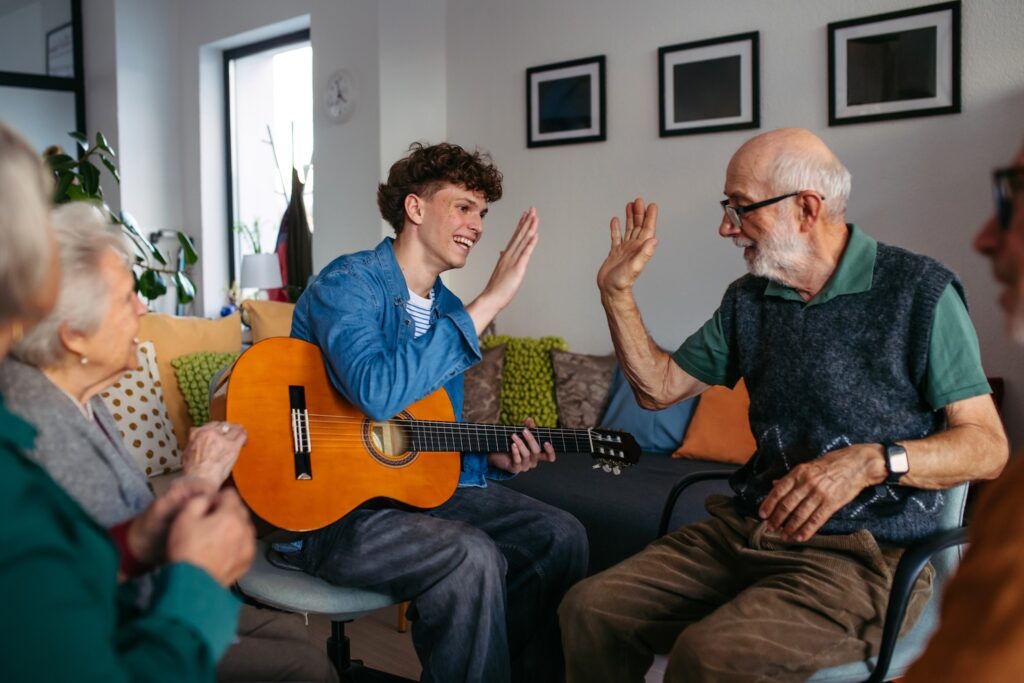
Music is one of the few stimuli capable of activating nearly all regions of the brain simultaneously. It engages the areas responsible for hearing, movement, and language, but above all, those involved in emotions and episodic memory.
The Awakening of Emotional Memory
It is often the case that older adults with significant memory impairments are able to sing the lyrics of a song from their youth without a single mistake. This phenomenon can be explained by the fact that musical memory is often spared from cognitive decline because it is deeply rooted in the emotional regions of the brain (the limbic system).
- Reminiscence: Listening to meaningful melodies helps bring back memories thought to be lost, fostering a sense of identity and continuity.
- Reducing anxiety: Soft music can lower cortisol levels (the stress hormone) and regulate heart rate, offering a soothing alternative to pharmacological interventions for evening agitation.
Rhythm stimulation
Rhythm has a direct effect on motor skills. For someone whose gait has become unsteady, the presence of a musical beat can help synchronize movements and reduce the risk of falls. It is a form of rehabilitation that is invisible, yet powerful.
Animal-assisted therapy: a sensory and emotional connection
Interaction with animals, or animal-assisted therapy, goes beyond the simple pleasure of a visit. It is a structured intervention that provides measurable physiological and psychological benefits for the elderly.
Breaking Isolation Without Words
For some older adults who have difficulty communicating verbally, the animal becomes an exceptional mediator. The animal does not judge, requires no linguistic effort, and offers unconditional affection.
- Sensory stimulation: Stroking fur, feeling the animal’s warmth, and observing its movements stimulate the senses and help ground the individual in the present moment.
- The release of oxytocin: Physical contact with an animal triggers the production of oxytocin, often called the “happiness hormone,” which provides a sense of security and immediate well-being.
Empowerment and Self-Esteem
Even small interactions, such as brushing a dog or feeding birds, restore a sense of purpose and competence in older adults. In a life journey where one often has to accept help, becoming the one who “provides care” is extremely rewarding for self-esteem.
Social interaction: fuel for the brain
Social isolation is one of the greatest enemies of cognitive health. The human brain is a social organ; it needs others to stay alert.
The complexity of conversation
Holding a conversation is a high-level intellectual exercise: it requires listening, processing information, searching one’s vocabulary, formulating a response, and interpreting the other person’s nonverbal cues. It’s a full workout for the frontal and temporal lobes.
- Shared meals: Turning a meal into a social occasion rather than a mere act of nourishment stimulates not only the appetite but also executive functions.
- Continuous learning: Participating in book clubs, board games, or discussions about current events forces the brain to create new thinking strategies.
Creating a prosthetic environment
A “prosthetic” environment is one designed to compensate for cognitive deficits without infantilizing the person. The goal is to maximize autonomy by reducing sources of confusion.
The Importance of Signage and Lighting
The aging brain needs clear cues. Abundant natural light helps regulate the circadian cycle (sleep-wake), thereby reducing nighttime confusion. Color contrasts between walls and furniture allow for better spatial orientation.
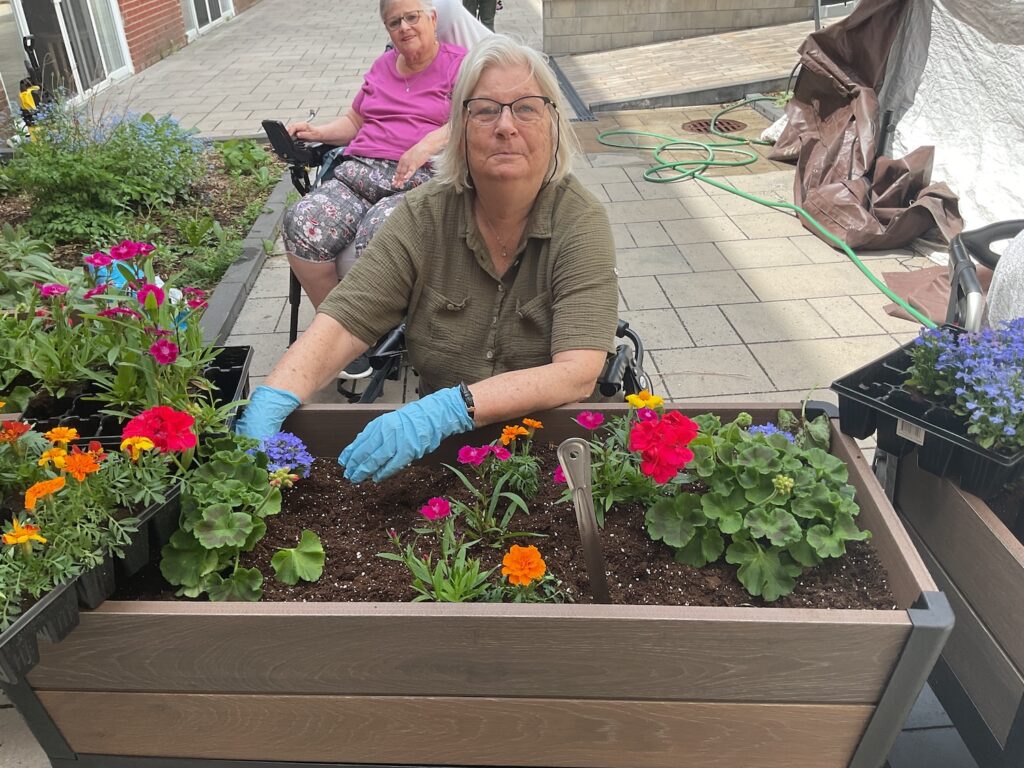
Gardens and nature: Access to a green space, even a small one, provides multisensory stimulation (smells, wind, sounds of nature) that calms the nervous system and encourages light physical activity.
FAQ: Frequently Asked Questions About Cognitive Stimulation
It’s never too late. The brain retains a certain degree of plasticity throughout life. Even if the benefits don’t mean “turning back the clock,” stimulation can often help stabilize the current condition and significantly improve mood and quality of life on a daily basis.
Music should be personalized. What stimulates one person may annoy another. It is crucial to draw on the person’s musical tastes from their youth (between the ages of 15 and 25), as this is the age when musical memories are most deeply ingrained. If indifference persists, explore other senses, such as smell (familiar scents) or touch.
Withdrawal is often a reaction to fatigue or the fear of falling behind in a conversation. It’s best to opt for small-group interactions (2 or 3 people) rather than large, noisy groups. Activities done side by side (coloring, puzzles, gardening) can sometimes be more reassuring than a face-to-face conversation.
Yes, when supervised by professionals. The animals are selected for their calm temperament and obedience. For people who are allergic to animals or afraid of them, there are now therapeutic robots (interactive stuffed animals) that offer similar benefits in terms of calmness and sensory stimulation.
Mandala Sante's Offerings in Senior Homes :

Articles